Some believe it is talent.
Others think it is destiny.
But the truth is much simpler.
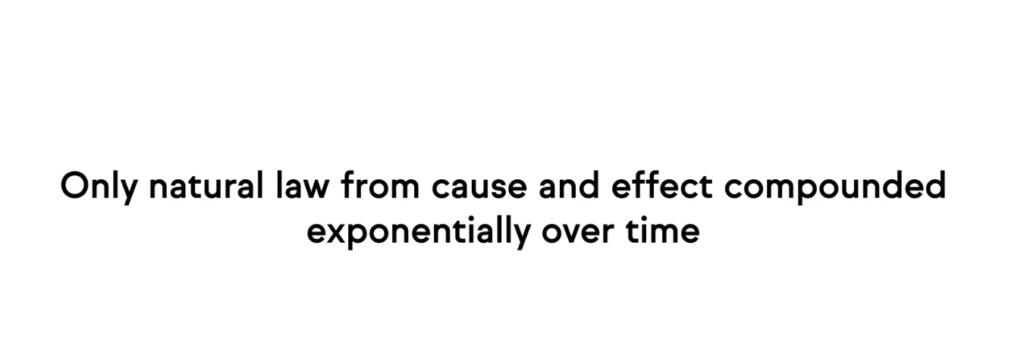
Success follows a simple rule:
Right Causes Ă— Consistency Ă— Time = Exponential Results
If you understand this rule and apply it daily, your life will change.

Some believe it is talent.
Others think it is destiny.
But the truth is much simpler.
Success follows a simple rule:
Right Causes Ă— Consistency Ă— Time = Exponential Results
If you understand this rule and apply it daily, your life will change.
Modern society is obsessed with health advice. Everywhere we look we see workout plans, diet charts, fitness influencers, and medical guidance telling people how to live healthier lives.
Yet health problems are increasing every year.
According to the World Health Organization, lifestyle diseases such as Type 2 Diabetes, Obesity, and Heart Disease are responsible for most deaths globally.
This creates an important question:
If people know what to do, why are they not doing it?
The answer reveals one of the biggest problems — and opportunities — of the 21st century.
The real problem is not knowledge about health.
The real problem is execution of healthy habits.
“You just need to handle today.
Tomorrow doesn’t need handling — when it comes, it becomes today.
Days don’t come in bunches. They come as a single ball, one per day.
There is no such thing as an entire life. All that ever comes is the present day.
Handle the present.”
In today’s fast-paced world, people are more informed than ever—yet less healthy, more stressed, and deeply dissatisfied with their lives.
We know what to do: eat better, exercise, sleep well, manage stress, focus on goals.
But most people fail at doing it consistently.
This gap between knowledge and execution is where lifestyle transformation becomes the most powerful solution of our time.
By Yash Bagla
When people hear the word lifestyle, they often think of fashion, travel, food, or Instagram aesthetics. But lifestyle is much deeper. It is not what you show to the world — it is how you live when no one is watching.
Lifestyle is the invisible system that drives your health, your mind, your energy, your confidence, and your entire life.
It is the collection of small daily choices that decide your future more than luck, talent, or motivation ever could.
Most people believe that once they achieve their goals —
buy their dream house, earn crores, or become the “best” in their field —
they’ll finally be happy.
But here’s the truth no one tells you:
That happiness doesn’t last.
In this short course-style guide, you’ll learn one of the most powerful ideas in business and human psychology —
the secret behind why people buy anything.

By Yash Bagla
Some people’s minds are calm like a still lake.
Others — like yours and mine — are oceans: deep, powerful, and full of movement.
We feel life more deeply — both joy and pain.
We notice details others overlook.
We dream bigger, think faster, and love harder.
This sensitivity isn’t a flaw.
It’s the same gift that makes us creative 💡, energetic ⚡, passionate ❤️, and thoughtful 🧠.
But this same gift also makes our brains easier to overload in today’s world — a world that never stops stimulating us.
We are living in the healthiest century in history — and somehow, the sickest.
Our ancestors battled nature for survival.
We battle our own habits.
Everywhere you look — from the gym to the boardroom — people feel the same: tired, anxious, distracted, and disconnected.
We are surrounded by comfort, yet starving for clarity, health, and peace.
Rohan is 24.
On January 1st, he wakes up motivated.
He’s bought new running shoes, signed up for the gym, and promised himself he’ll eat clean. The first two weeks are full of energy — morning workouts, salad bowls, and late-night motivational videos.
But by February, life creeps in.
Deadlines pile up. Friends call for weekend parties. Instagram scrolling stretches past midnight. The gym feels harder, the salad feels boring, and the pizza feels rewarding.
By March, Rohan quits. “I’ll start again next year,” he tells himself.
Does this sound familiar?
If yes, you’re not alone. In fact, you’re part of the majority.
Studies show that:
The shocking truth?
The world’s biggest health crisis is not obesity, not diabetes, not even lack of exercise.
👉 The real crisis is that people cannot sustain healthy habits long-term.